Sougwen Chung. Body Machine (Meridians)
From April 23 to July 12, 2026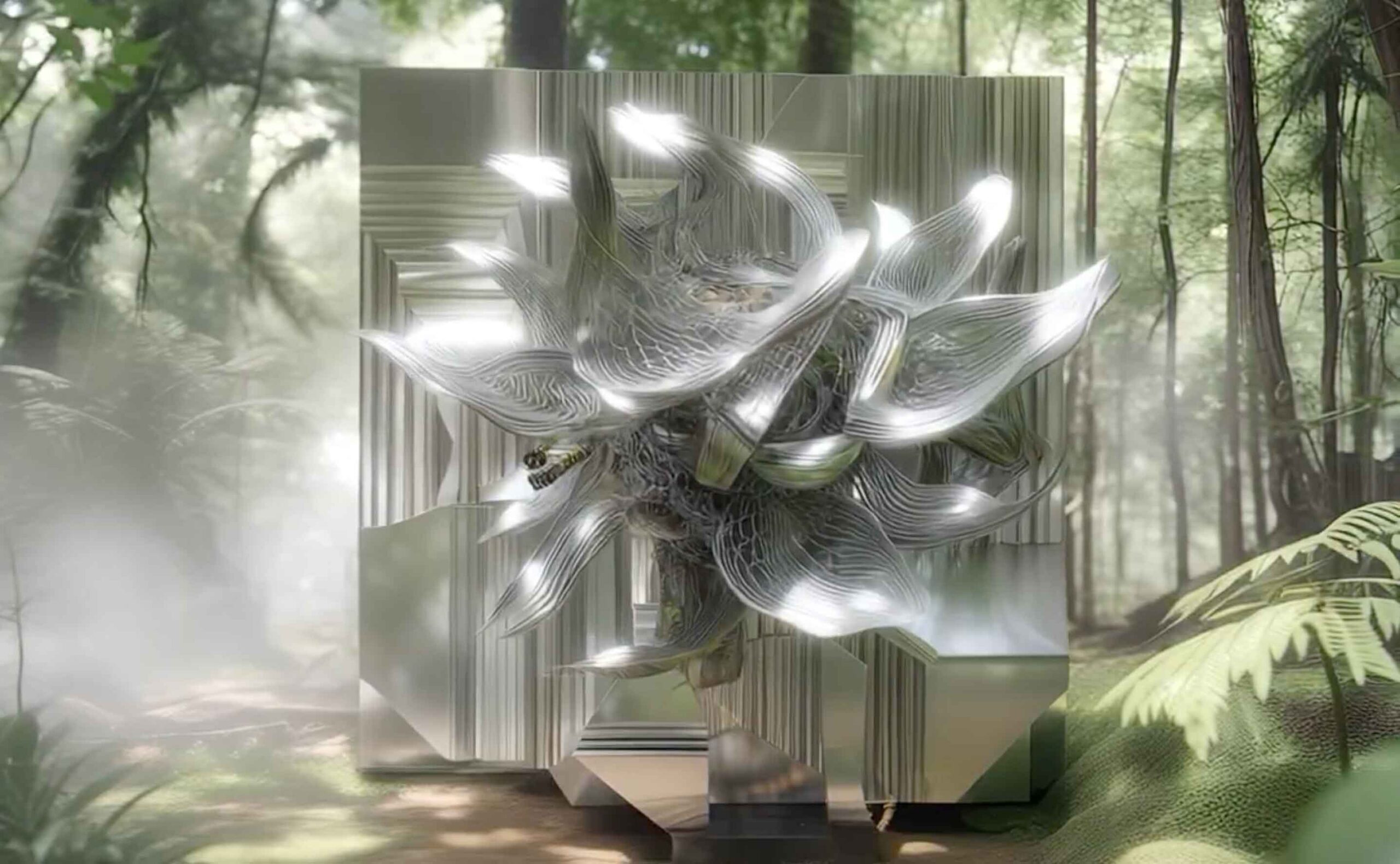
Palazzo Citterio presents Body Machine (Meridians), a large-scale immersive installation by artist and researcher Sougwen Chung. Over the past decade, Chung has developed a practice at the intersection of drawing, performance, robotics, and artificial intelligence, creating systems in which machines learn from her gestures and collaborate with her in real time. Her work combines embodied experimentation, data collection, and choreography to explore how humans and technological systems can co-evolve.
Project realized in collaboration with the Museo nazionale dell’Arte digitale
The project is curated by Auronda Scalera and Alfredo Cramerotti
Conceived for the LED wall of Palazzo Citterio, Body Machine (Meridians) brings together movement data from Chung’s own body, environmental recordings, machine learning systems, and immersive sound design into a living environment of light, motion, and transformation. The forms generated are biomimetic, shaped not from stone or metal but from air, light, and data. They appear, shift, and dissolve, behaving less like objects than like weather patterns or currents.
At the center of the work is the concept of the meridian. A meridian can designate a planetary line used to measure the Earth, a pathway in the human body through which energy flows, or a symbolic connection between distant points. By weaving these meanings together, Chung invites reflection on the correspondences between the human body, technological systems, and the planet. These are not separate realms but interconnected processes in continuous exchange.
One chapter of the installation focuses on water and ice. For this project, Chung undertook an Arctic expedition, scanning melting glaciers, recording the light of the polar sun, and immersing herself physically in icy waters. Movement data shaped by cold and resistance became part of the installation’s digital language. The glacier appears here as sign of climate crisis and as a temporal system, one that embodies Henri Bergson’s concept of durée, continuous lived duration, in which change is gradual yet unceasing.
Installed within the historic architecture of Palazzo Citterio in collaboration with The National Museum of Digital Art, the work introduces multiple layers of time into dialogue: architectural time, planetary time, bodily time, and computational time. The LED wall functions less as a screen than as a membrane through which light, sound, and information circulate. The installation does not overwhelm through spectacle. It invites slowing down, attuning to subtle shifts of rhythm and energy.
The philosophical horizon of the work draws on Gilbert Simondon’s understanding of technology as relational and evolving, Maurice Merleau-Ponty’s phenomenology of the lived body, and Taoist thought, in which water, adaptive, yielding, persistent, is the highest model of intelligence.
Body Machine (Meridians) proposes a shift from control to correspondence, from extraction to reciprocity, from automation to collaboration. It suggests that imagining new technological futures begins not with faster machines, but with deeper listening.
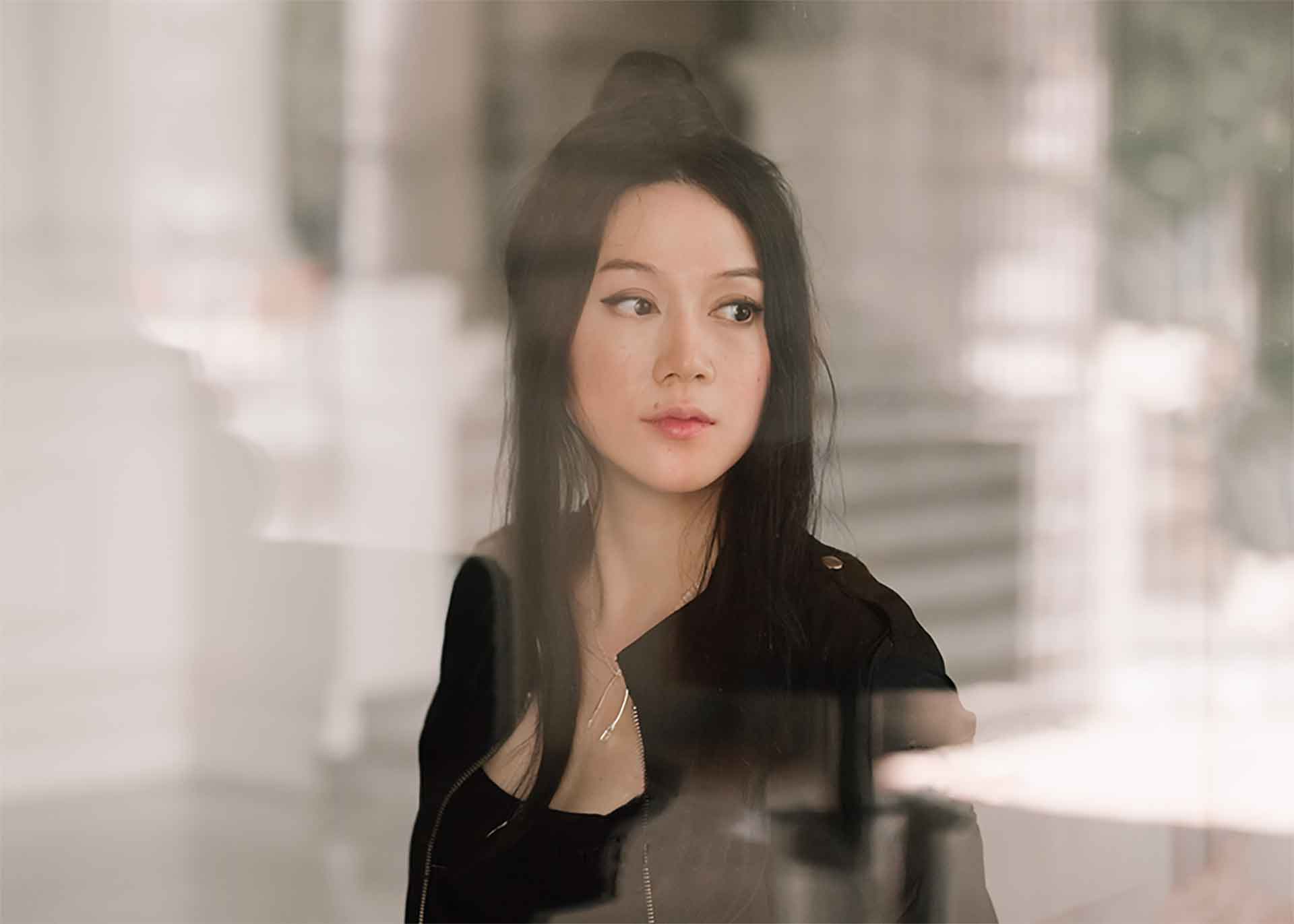
Sougwen Chung (b. 1985) is a Chinese-Canadian artist and researcher, widely regarded as a pioneer in human–machine collaboration. Their work MEMORY (Drawing Operations Unit: Generation_2) is part of the permanent collection of the Victoria and Albert Museum, the first AI model to be collected by a major cultural institution.
Chung’s multidisciplinary practice spans installation, drawing, performance, and sculpture in dialogue with robotics, machine learning, and bio-sensing. Through these interwoven forms, they investigate the shifting relationships between the gesture of the hand and the gesture of the machine. Their work conceives collaboration as an evolving coaesthetic system, in which human, machine, and environment co-produce open choreographies of perception and meaning.
Chung has been named one of TIME’s 100 Most Influential People in AI and honored with their Global Impact Award. They have been recognized as a Cultural Leader at the World Economic Forum, and celebrated for excellence in the Arts & Sciences as Woman of the Year in Monaco. Their accolades include the Lumen Prize for Art in Technology, the Japan Media Arts Excellence Award for Drawing Operations, and a notable commission for Omnia per Omnia. Additionally, Chung is the founder of SCILICET, an experimental studio based in London.
Info
When
From April 23 to July 12, 2026
Where
Palazzo Citterio, ground floor
Hours
Tuesday through Sunday: 8:30 a.m. to 7:15 p.m. (last admission at 6:00 p.m.)
Exhibitions and Events Department
tel. 02 72263.259 – 266
[email protected]
Communications Department
tel. 02 72263.259 – 266
comunicazione.brera@ cultura.gov.it
Press Office
CLP Relazioni Pubbliche
Marta Pedroli | M. +39 347 4155017 | E. [email protected]
T. + 39 02 36755700 | www.clp1968.it